Guide to Visiting Teruel: Less Known Spain
You may have heard of Teruel thanks to the famous story of the Lovers of Teruel. Though located along the main road connecting Valencia and Zaragoza, this beautiful city is often overlooked by tourists. However, we believe it’s a true hidden gem.
Teruel offers something for everyone. Its architecture is stunning, ranging from Mudéjar masterpieces to elegant Art Nouveau buildings. The natural surroundings are equally impressive: the city sits atop a high plateau, offering breathtaking views. Finally, in Teruel you’ll enjoy some of the best food in Spain.
General Outline
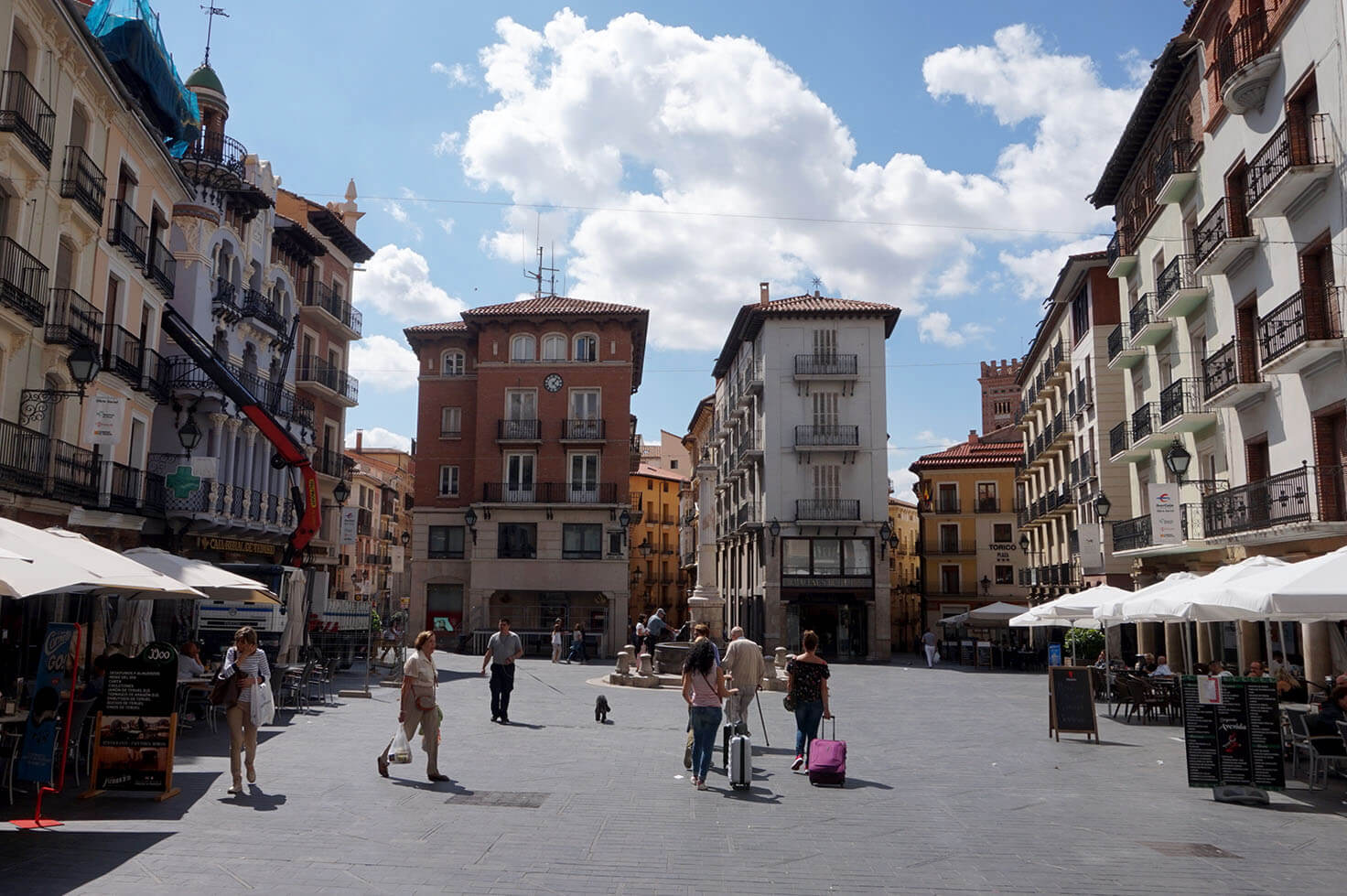
The City of Teruel is the capital of Teruel Province in the Autonomous Community of Aragon. With a population of just over 35000, Teruel is the smallest provincial capital in Spain. Probably the rugged mountains that surrounded it isolated Teruel through the centuries. King Alfonso II founded Teruel in the 12th Century at the border of the Crown of Aragon.
Remember that the Moorish Empire dominated the area for centuries until the ‘Reconquista’. Indeed, the Moorish empire controlled a big chunk of what is now Spain for some 800 years. The same old story: empire after empire claiming a natural right to exploit people and nature. Anyhow, many Muslims decided to stay together with Christians and Jews. It is this rich cultural heritage that gave birth to the unique Mudejar Architecture that flourished in Teruel in the Middle Ages.
Things to Do in Teruel
Climb the Escalinata
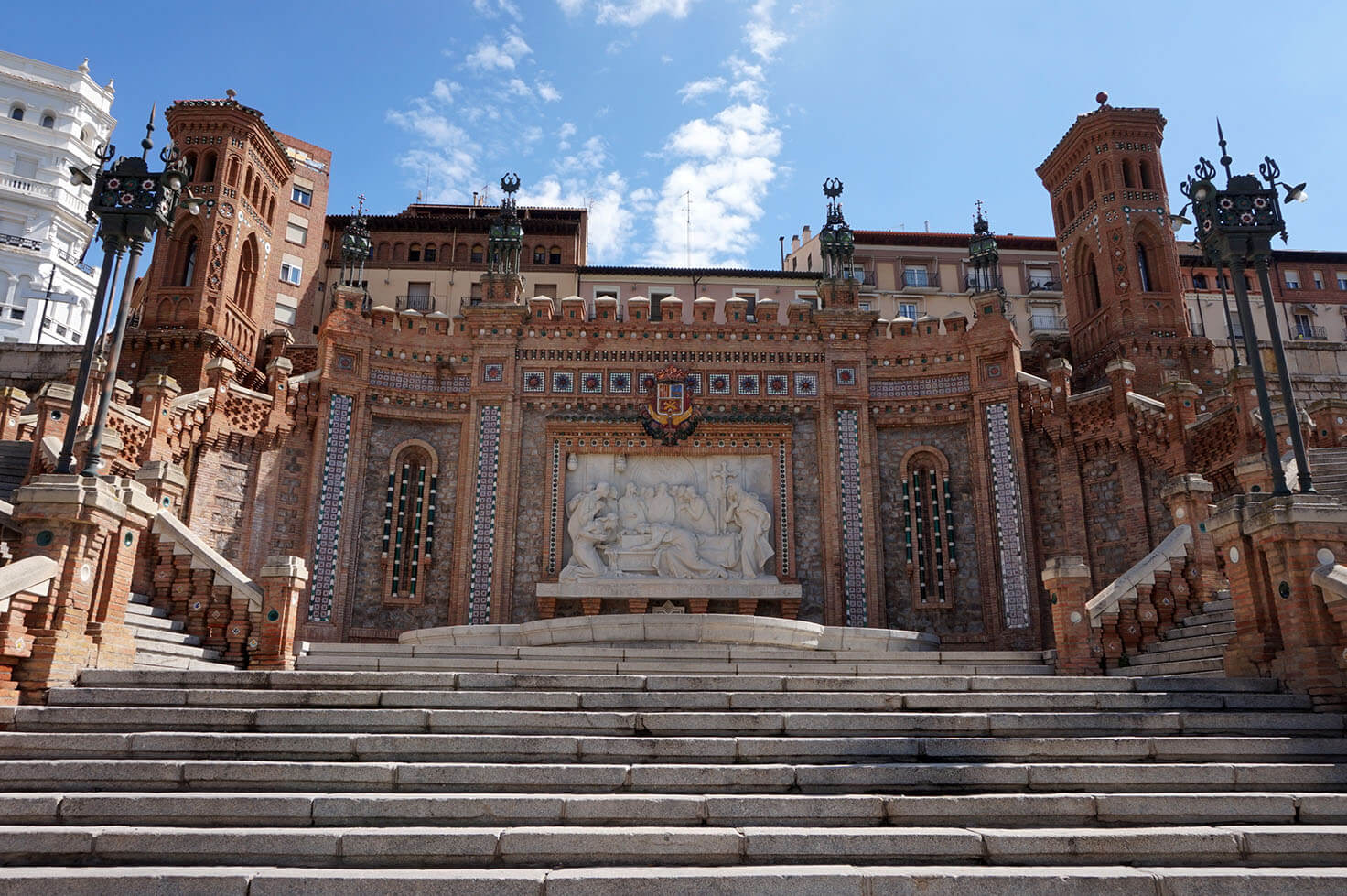
You will find almost all of Teruel’s attractions within the city walls. One of the first structures you will notice is the Escalinata de Teruel. This giant staircase connects the upper and lower towns. Guess what? Mudejar architecture and Art Nouveau style inspired its architect!
The Escalinata is divided into three sections. The first passes through a small park and includes just a few steps. The second is the main staircase, leading up to a viewpoint with a relief dedicated to the Lovers of Teruel and a fountain. The final section consists of two semicircular stairways that rise to the top level.
Roam around the Main Square
From there walk along Nueva Street all the way to Plaza del Torico, Teruel’s main square. This long triangular plaza is flanked by porticos on its two longer sides. During the Middle Ages, it was home to the city’s marketplace and the guild houses of wealthy merchants. Its current appearance dates from 2007, thanks to the work of renowned Spanish architect Fermín Vázquez.
You’ll notice the little statue with a bull, which gives the square its name. Installed in 1865, the statue is only 35 cm tall. Take time to admire the surrounding buildings from different historical periods, especially the striking Art Nouveau Casa El Torico.

Visit the Aqueduct
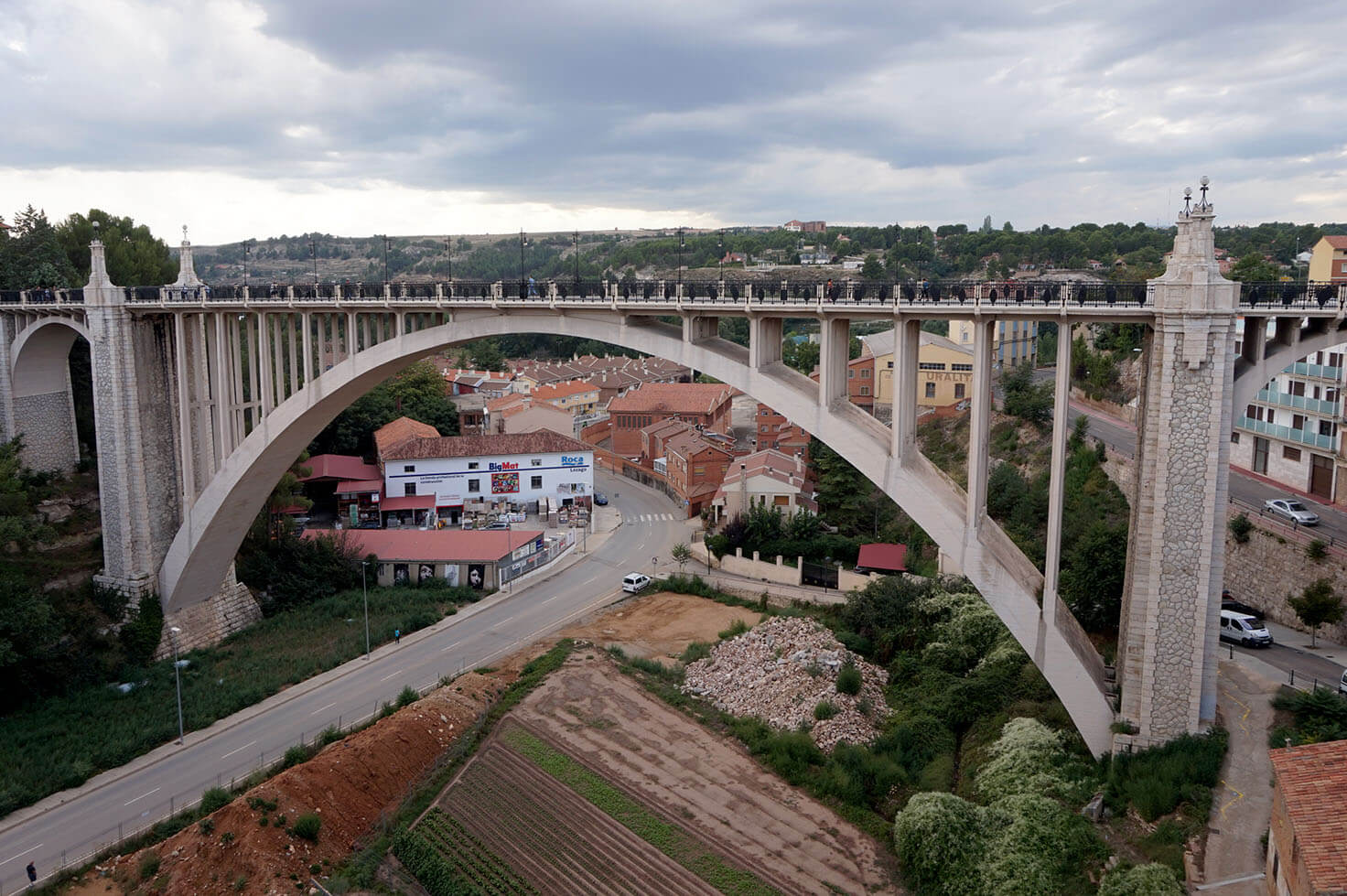
If you continue along Joaquin Costa Street until the end and then turn left, you’ll spot Teruel’s Aqueduct Los Arcos. Though it looks Roman, it was actually built between 1537 and 1558 by a French architect, which is why it’s sometimes called the French Aqueduct.
Looking north from the main road, you’ll see its two distinct levels: the upper one originally carried water, while the lower one served as a pedestrian bridge. Today, the aqueduct no longer carries water, but it still functions as a walkway. Cross the bridge and enjoy the views!

Get to Know Mudejar Architecture
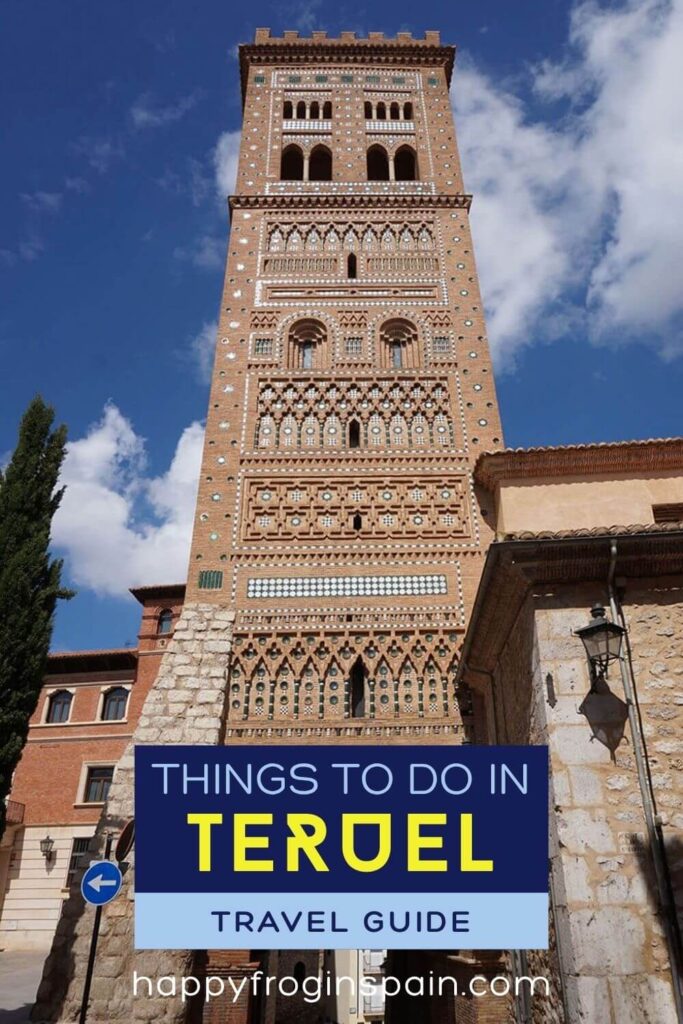
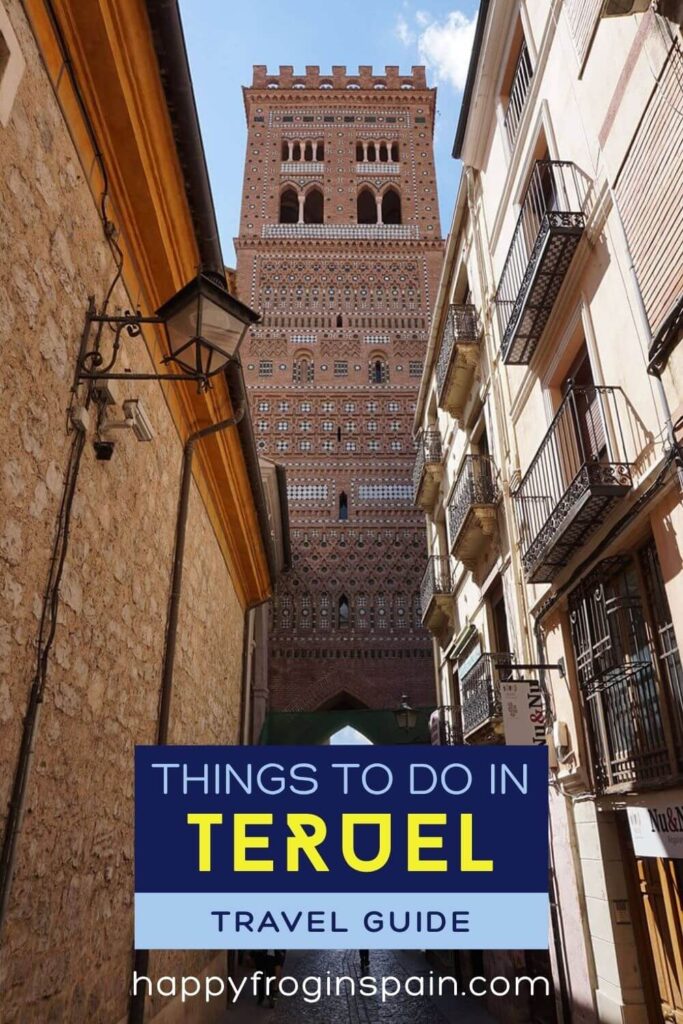
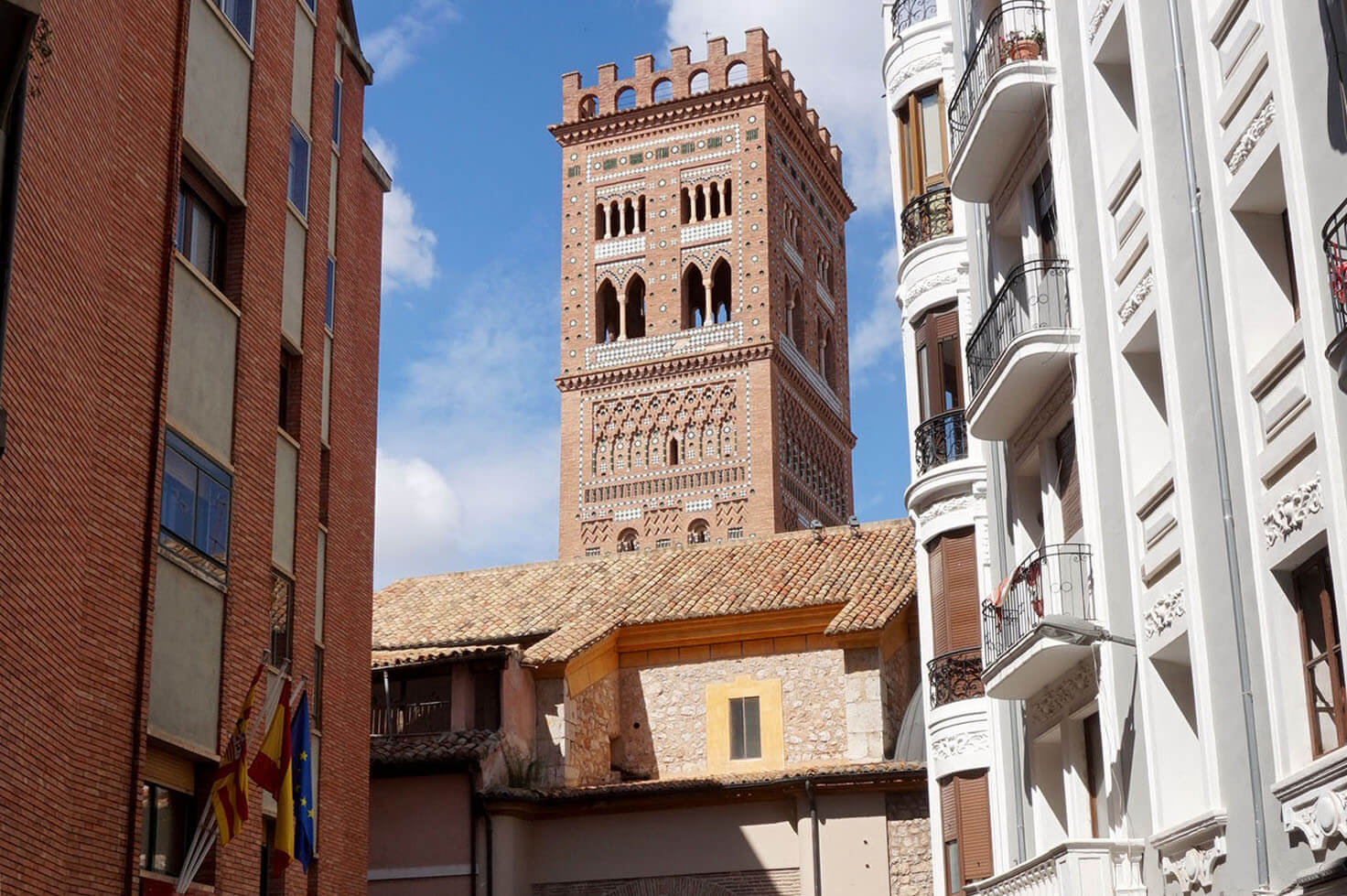
Mudejar Architecture is an artistic style that incorporates decorative elements typical of Muslim architecture into Romanesque and Gothic structural traditions. Therefore, Teruel’s Mudejar buildings have rounded or pointed arches and glazed ceramics.
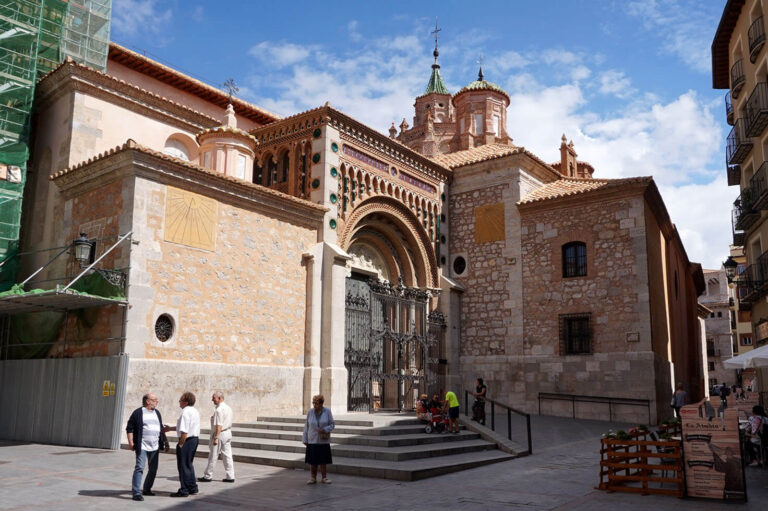
In 1986 UNESCO included 4 medieval churches/towers in its list of World Heritage Sites: the Teruel Cathedral, the San Pedro Church, the San Martín Church Tower and the San Salvador Church Tower. All are easily recognizable by their tall red brick towers. Take your time and climb as many towers as you can. The views from the towers are fantastic!
Explore Art Nouveau Heritage
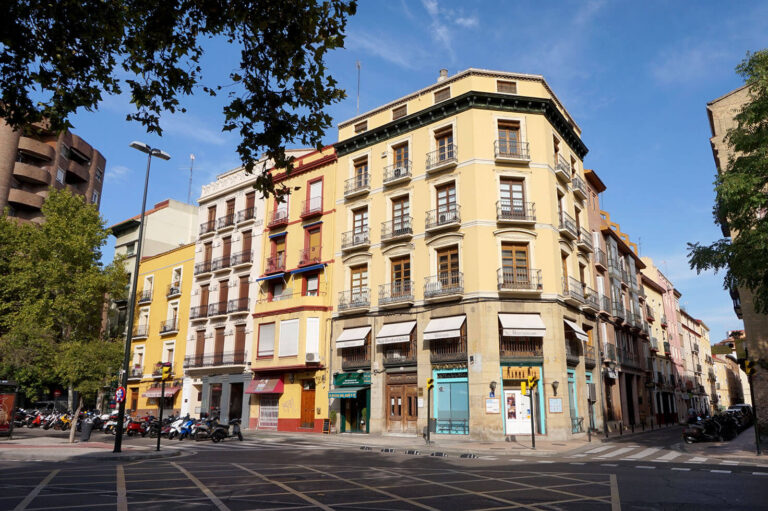
You’ll find plenty of beautiful art nouveau houses in Teruel’s old town. The style, which arrived here from Catalonia, is locally known as Modernismo. It is defined by organic, flowing lines, intricate wrought ironwork, and floral motifs. The already mentioned Casa El Torico is a four-story building with curved lines and a symmetrical composition that breaks at the corner with Hartzembusch Street.
On the same square stands the smaller Casa La Madrileña. You will recognize it by its four irregularly shaped windows on the top floor. The pastel-colored Casa Ferrán, located on Nueva Street halfway between the Escalinata and the square, is the largest and most lavishly decorated Art Nouveau house in Teruel. Finally, don’t miss Casa Bayo, tucked away on tiny Bretón Square. You’ll love its spectacular wrought-iron details.

Visit a Museum or Two
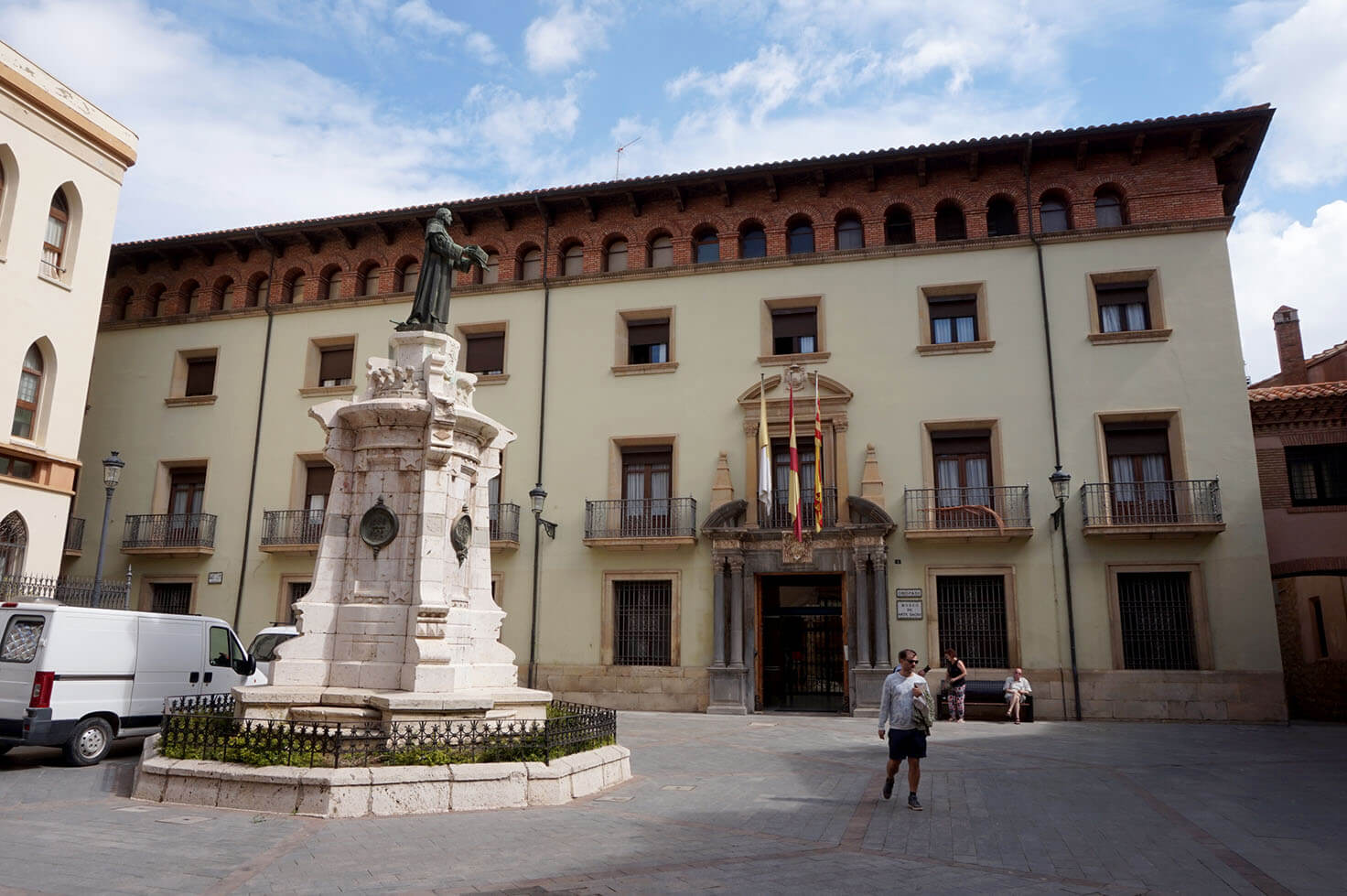
You’ve got four museums to visit in Teruel. The Museum of Teruel is an incredible palace from 1592. If you think that the stone building looks gorgeous from the outside, wait till you see the collections inside. Check out the Museum of Religious Art next to the Cathedral. Get the combined ticket and admire some of the best religious objects in the country.
The Museum of the Lovers is a contemporary building in the heart of the old town. It’s a very sad story that dates back to the 14th Century. The mummies are the original ones from 1560, and the coffins are a masterpiece. The Aragon Museum of Paleontology is in the new part of town. It’s got original dinosaur bones. Children love it.
Go on a Day Trip
You can’t travel to Aragon without visiting one of Spain’s most beautiful towns: Albarracín. Before the rise of Teruel, it was the most important town in the region. Today, only about 1,000 people live in this charming place where time seems to have stopped centuries ago.
Albarracín’s main highlight is its spectacular old town. It’s a labyrinth of narrow streets, staircases, and hidden passages, with stunning views at every turn. The town is perched on a cliff high above a river, there’s a medieval castle and city walls. Plus, some of the best hikes in the region begin here.

Where to Stay
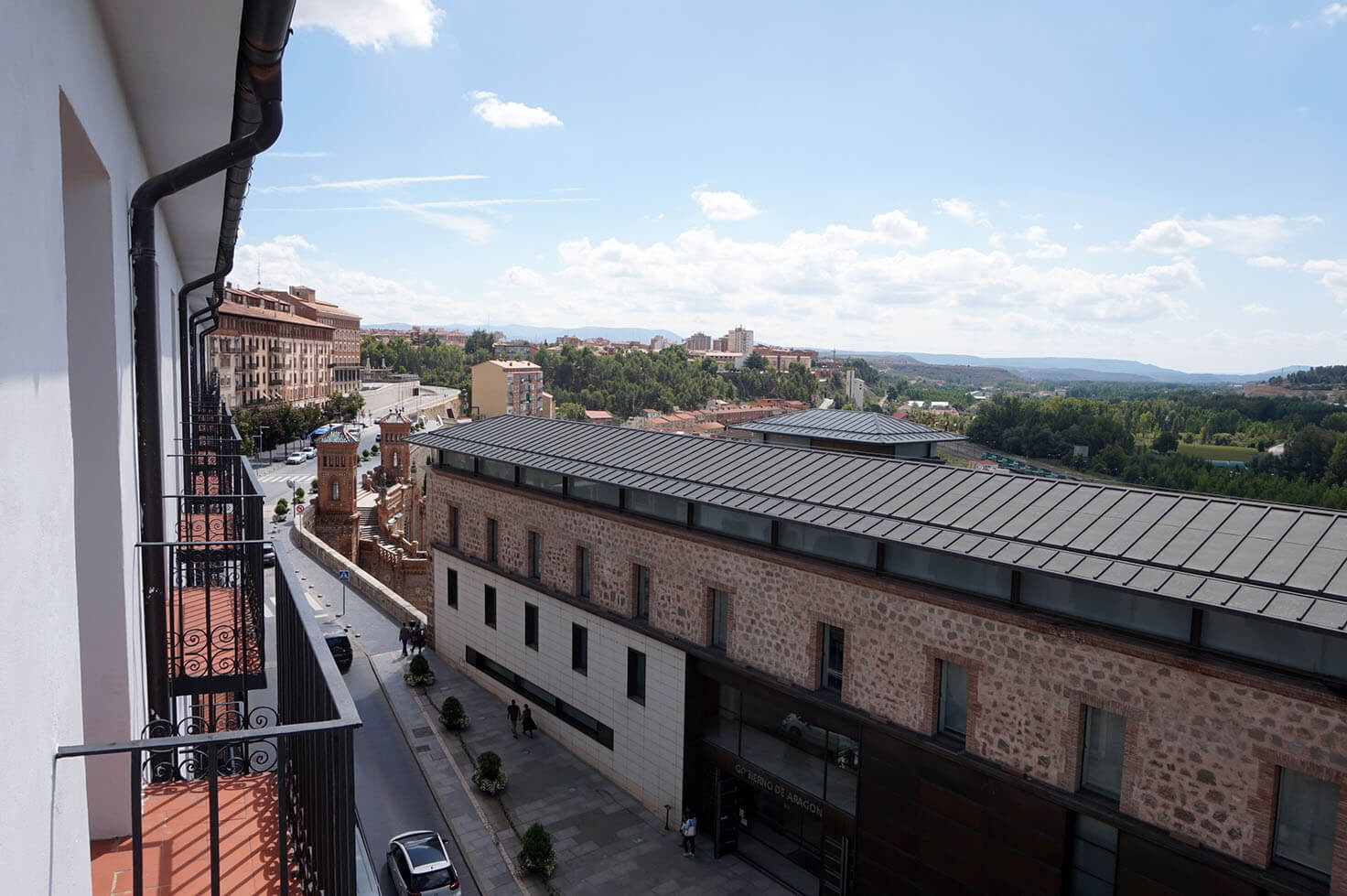
Contrary to what we expected, Teruel has plenty of good hotels to choose from. Since most sights are inside the old town, that’s the place to be. We stayed at the fabulous Reina Cristina, next to the Escalinata. Great service, comfy rooms, and fantastic views made us feel at home.
Other two nice hotels inside the old town are the Sercotel Torico Plaza near the main square and the Hotel Teruel Plaza on San Juan Square. At the footsteps of the Escalinata stairs, you will find another good option: the Gran Hotel Botánicos. Finally, if you have a thing for historical buildings stay at the Parador de Teruel. Granted, it is a bit out of the city, but we are talking about a beautiful historical palace.
Where to Eat/Drink
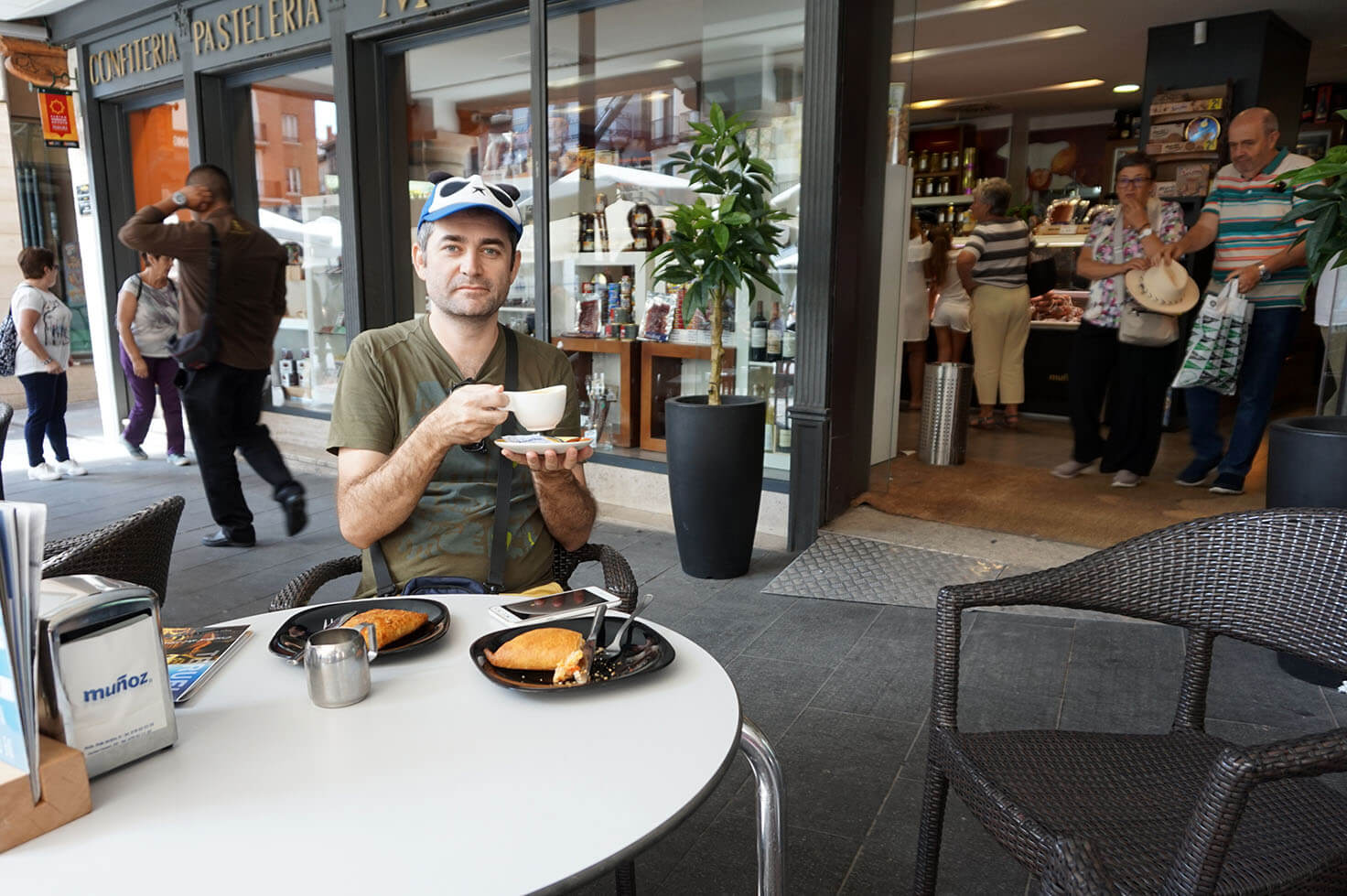
In Teruel, have breakfast in Café Muñoz, on the main square. They serve the famous Teruel ham and delicious cakes! Not only is the food great, but the atmosphere is fantastic. Yain is the best restaurant in Teruel. The food is yummy, and they offer 200 wines by the glass! For top-quality Mediterranean food, go to Locavore.
There are tapas bars all around the city center. Our favorite is Pura Cepa Vermú. This traditional restaurant offers 125 types of vermouth! Locals flock to La Barrica after work for tapas, beer, and wine. The pinchos are delicious. Teruel bars are simple and attract mostly a young crowd. We love Bar Gregory with its tables on Ovalo square.
How to Get to Teruel
Teruel is located between Zaragoza and Valencia, thus it’s fairly easy to get there. Daily trains and buses connecting these two large cities stop in Teruel. Four comfortable trains operate each day and the journey from both Zaragoza and Valencia takes about 2,5 hours. If you rather take a bus, 6 depart each day from Zaragoza. The journey takes between 2 to 3 hours.
Direct buses from Madrid get to Teruel in 4 to 5 hours. Though one bus a day connects Teruel and Barcelona, it’s an almost 7-hour journey. Actually, the best way to go from Barcelona to Teruel is to take the fast train AVE to Zaragoza, the journey takes 1,5 hours. Once in Zaragoza you can take a bus or train to Teruel as described above.