Mudéjar Architecture of Aragon: 10 Impressive Buildings
Spain is home to some of the best architecture in the world. From ancient to modern times, there are countless examples of world-class architecture all across the country. That’s one of the main reasons why I moved there in 2006 (I’m an architect).
Most Spanish heritage belongs to some of the dominant styles of its time. But several styles are distinctly Spanish. They reflect the country’s rich and unique history. Mudéjar architecture is a medieval style that combines Romanesque and Gothic shapes with Islamic decorations.
You’ll find some of the best examples of Mudéjar architecture in the autonomous community of Aragon. After the Spanish Reconquista, most Muslims left Spain. However, in Aragon, many Mudéjar craftsmen stayed and applied their craftsmanship to churches and palaces.
Characteristics
Mudéjar architecture is a mix of East and West. While most churches and palaces built in this style are predominantly Romanesque or Gothic, they feature unique oriental decorations. You’ll easily recognize its zigzag and rhombus patterns and stylized plants.
One of the most distinct elements of Mudéjar buildings is the intricately decorated tower. Its tall, square or octagonal appearance resembles that of a minaret. Most towers have richly decorated facades with brick and glazed ceramics and have semicircular, pointed, or horseshoe-arch openings.
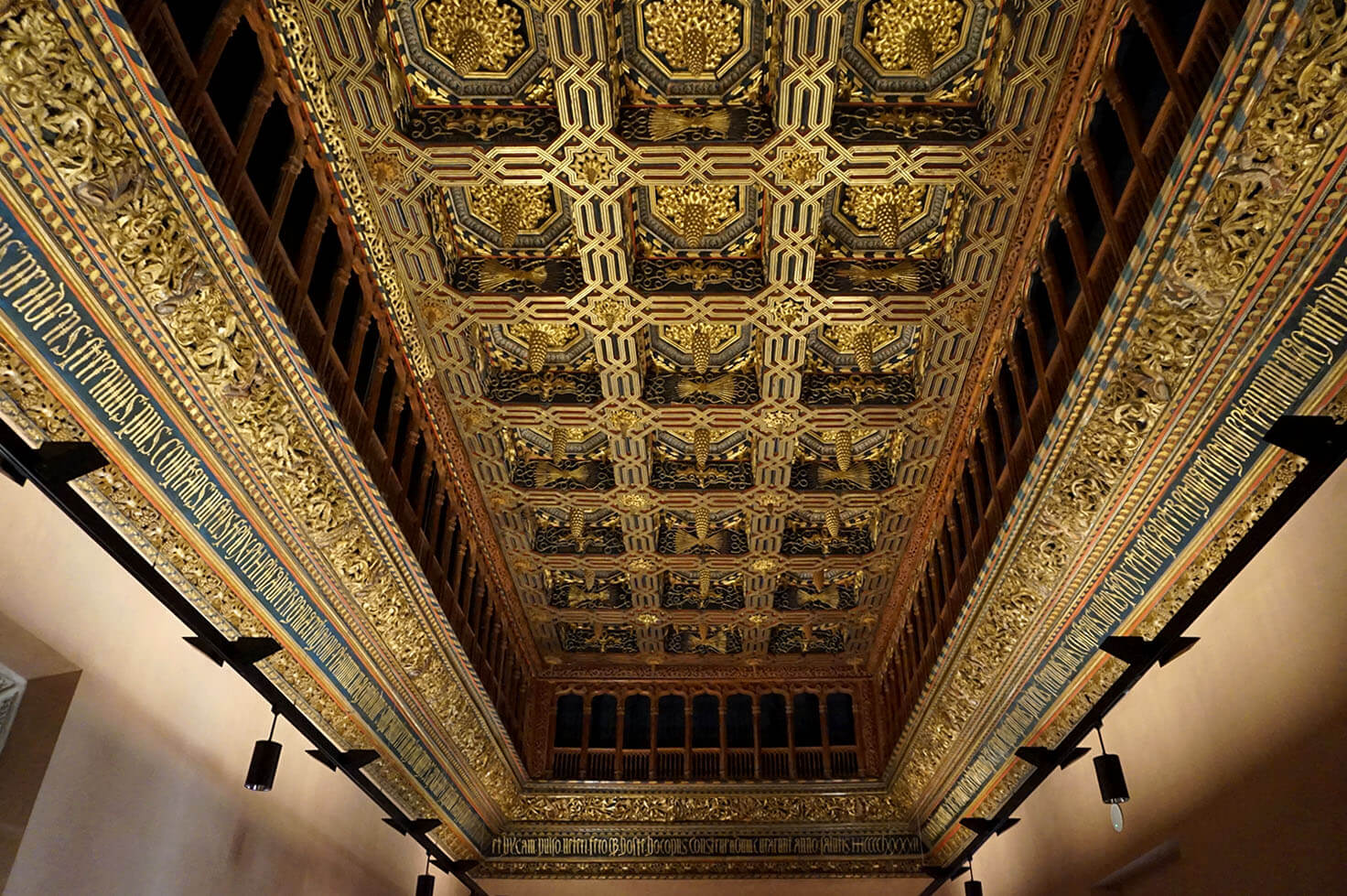
The interiors of these buildings are equally impressive. The most notable element is the richly decorated coffered wooden ceiling. It is painted and includes geometric elements from daily life, coats of arms, or animals. The best examples are in Teruel and Zaragoza.
Teruel
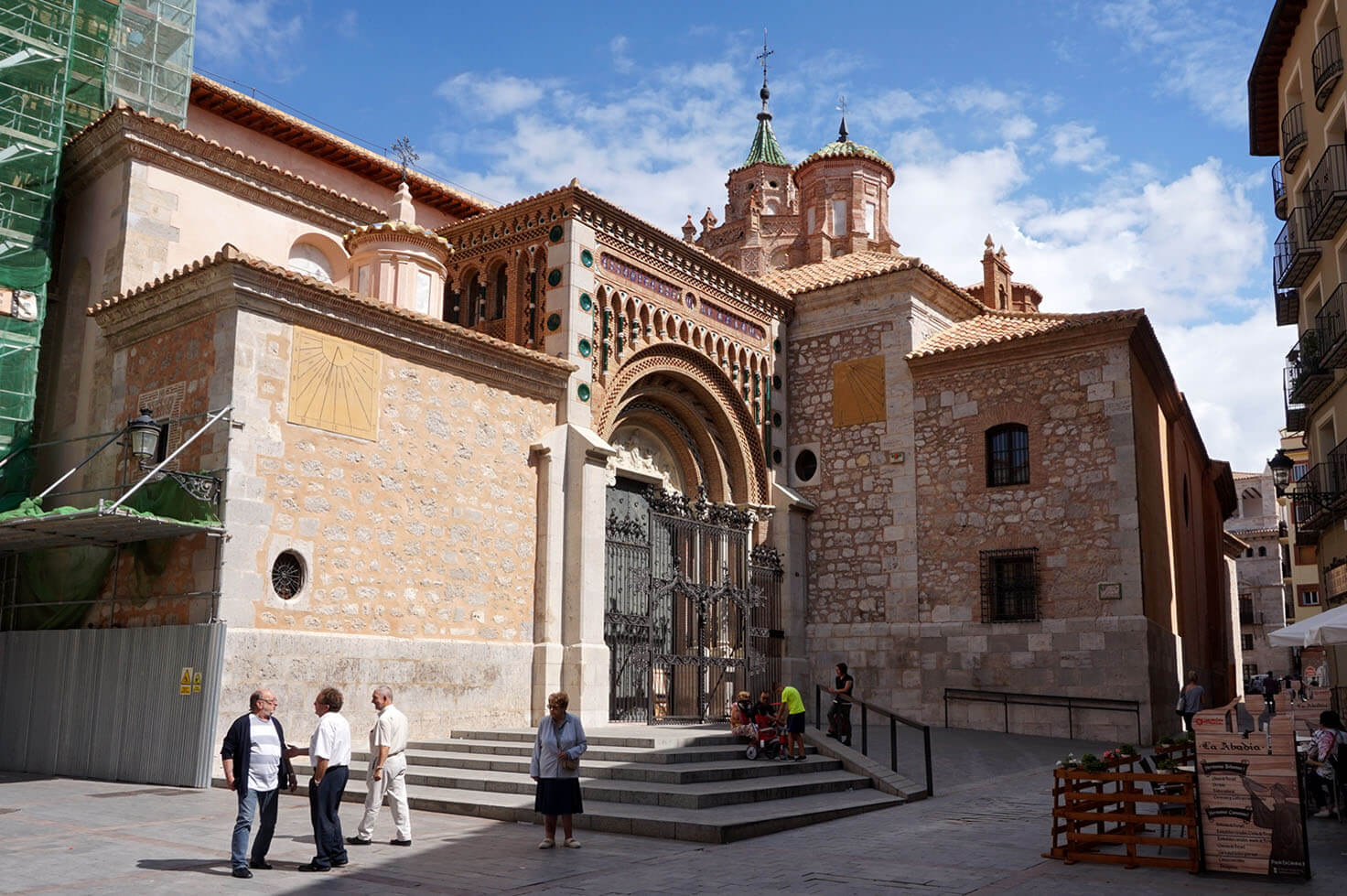
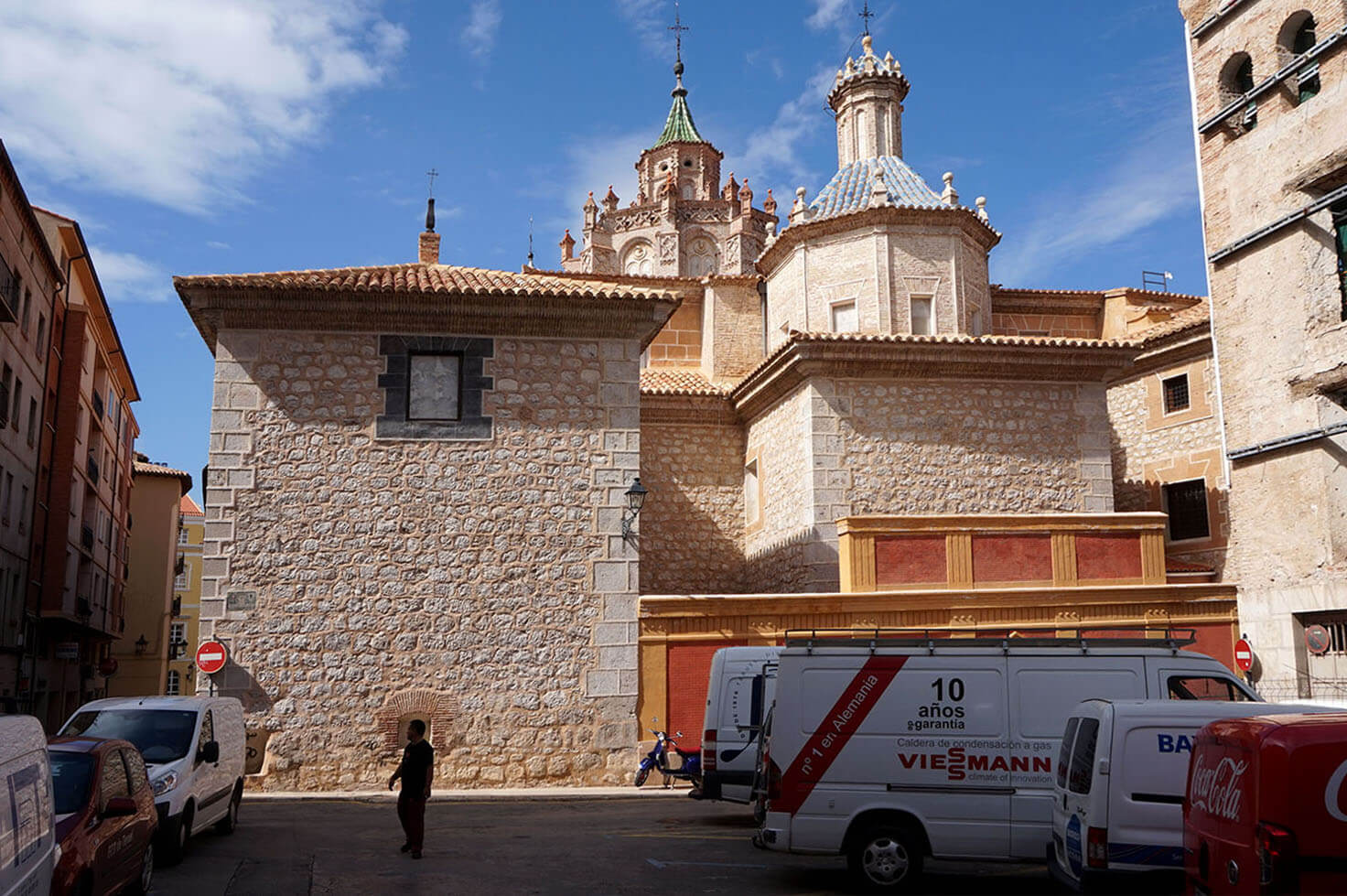
Catedral de Santa María de Mediavilla de Teruel
The history of Teruel Cathedral goes back to the late 12th century, when its construction started in Romanesque style. A century later, a Mudéjar tower and three naves were added.
In the 14th century, the Romanesque apses became Mudéjar, and in the 16th century, the lantern tower was added in the same style. Finally, in 1909, the façade was decorated in Neo-Mudéjar style.
Teruel Cathedral is one of the most important examples of Mudéjar architecture. Especially interesting are its bell tower, coffered ceiling, and lantern dome. Together with three other churches in Teruel, it’s a UNESCO World Heritage Site.
You can tour the Cathedral together with the Museum of Sacred Art.
San Pedro Church and Tower
Though San Pedro Church dates back to the late 14th century, its bell tower is a century older. Built at the end of the 13th century, next to the original church, it is the oldest example of Mudéjar style in Teruel.
It’s a single-nave church with side chapels. A rib vault and transverse arch cover it. The cloister, built adjacent to the church in the 14th century, is one of the rare examples of Mudéjar cloisters.
In 1555, the mummies of the Lovers of Teruel were discovered in the basement of one of the side chapels. Today, this chapel is known as the Chapel of the Lovers and is open to visitors.

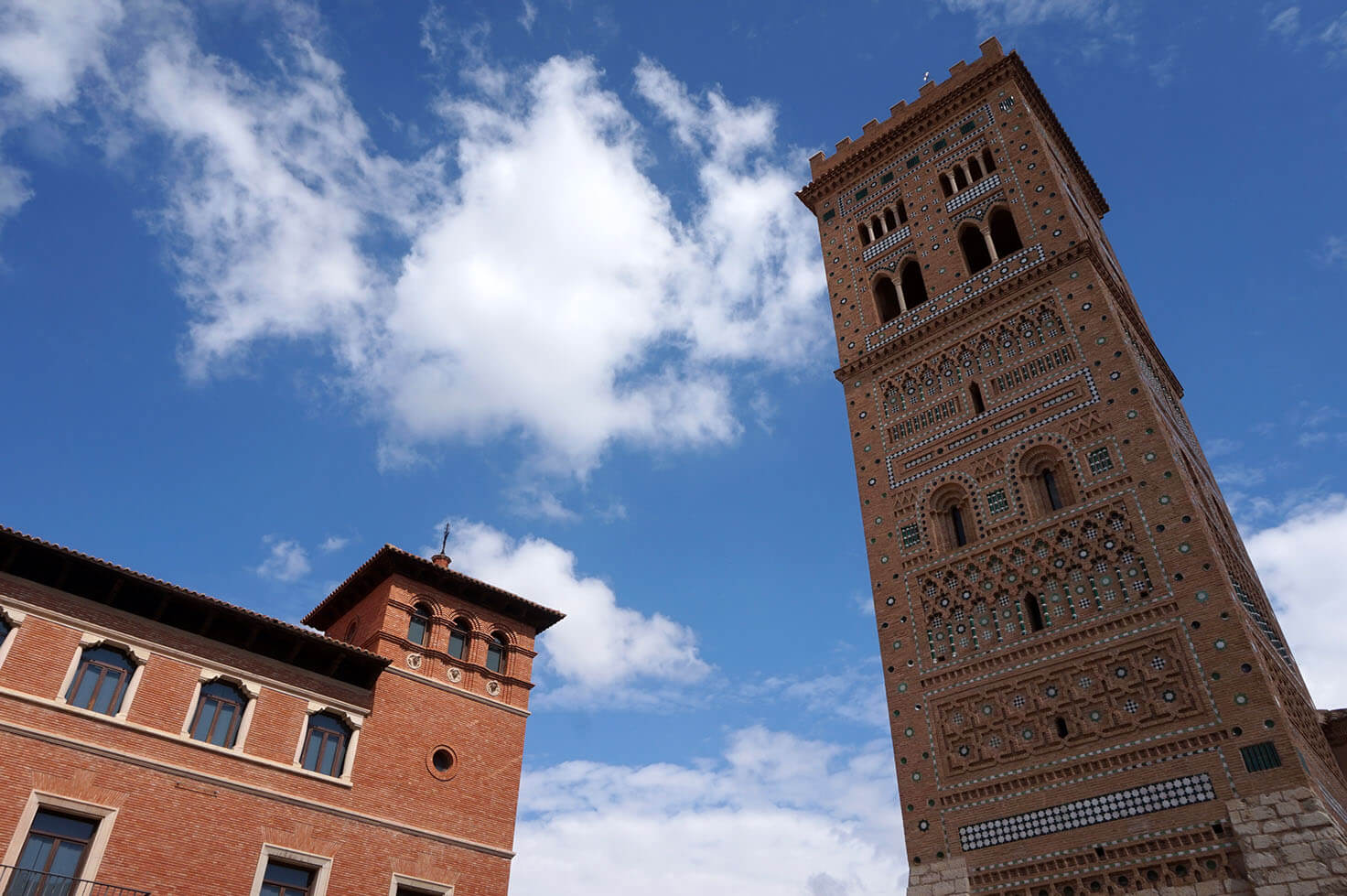
San Martín Tower
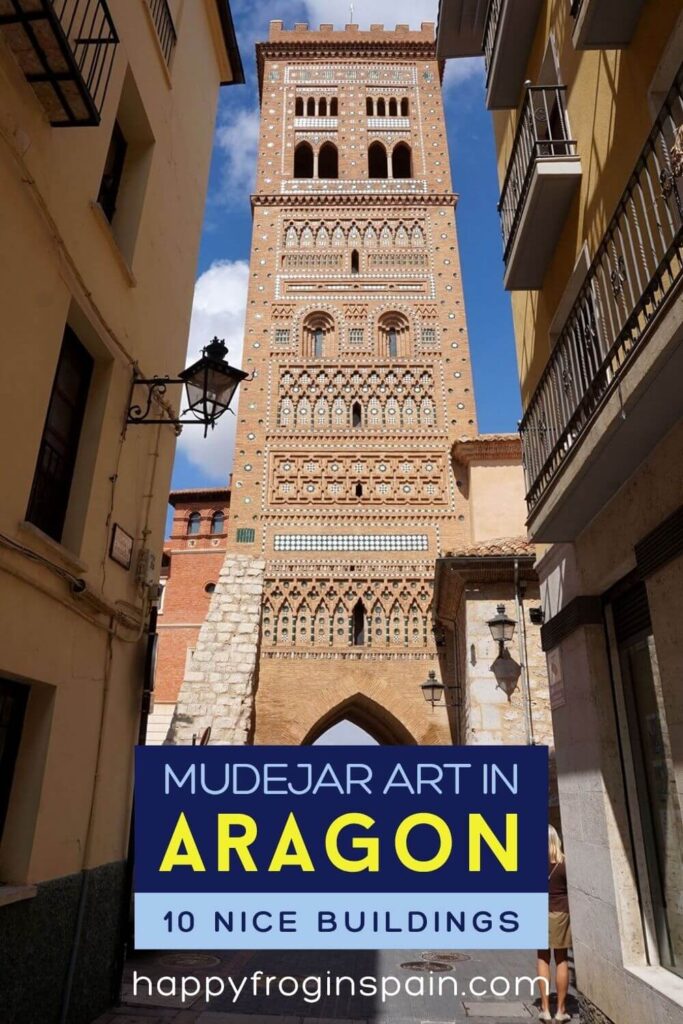
The San Martín Tower was built in 1316. Between 1549 and 1551, major works were carried out on the tower and its surroundings. The stonework at the base was reinforced, and all of the adjacent houses were demolished to make room for the square we see today.
During the course of the 20th century, several restorations took place. The original glazed ceramic tiles acquired a more muted appearance. The last intervention was carried out between 2002 and 2007, when the old entrance under the tower was opened.
San Salvador Tower
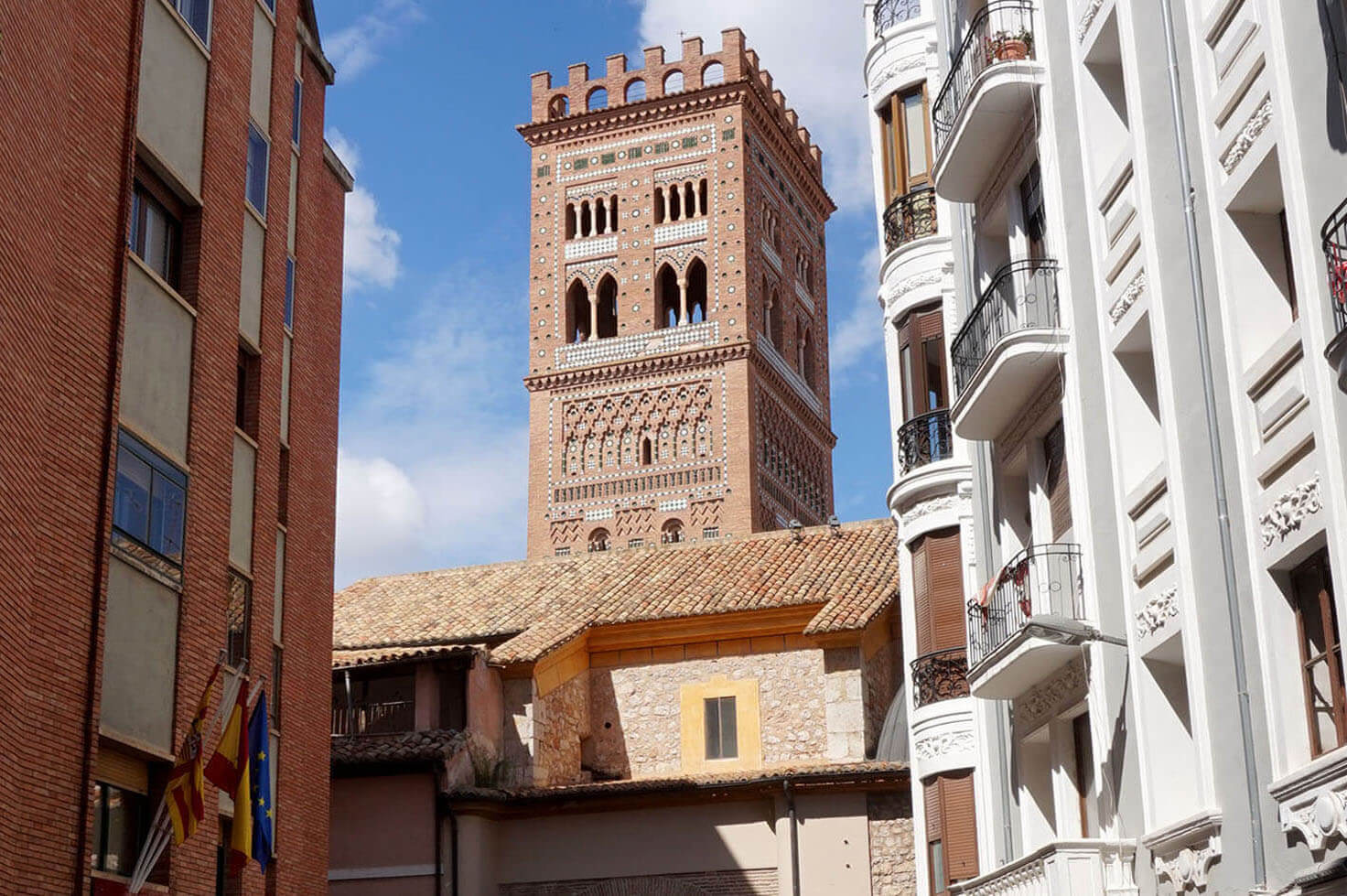
The San Salvador Tower is another structure from the 14th century. Just like the San Martín Tower, it was inspired by a minaret, with two concentric square towers and a staircase between them.
The tower is nestled between the surrounding buildings, directly above San Salvador Street. A pointed-arch tunnel under the tower allows for uninterrupted passage. You can go up to enjoy some of the best views of Teruel.
Zaragoza
San Pablo Church
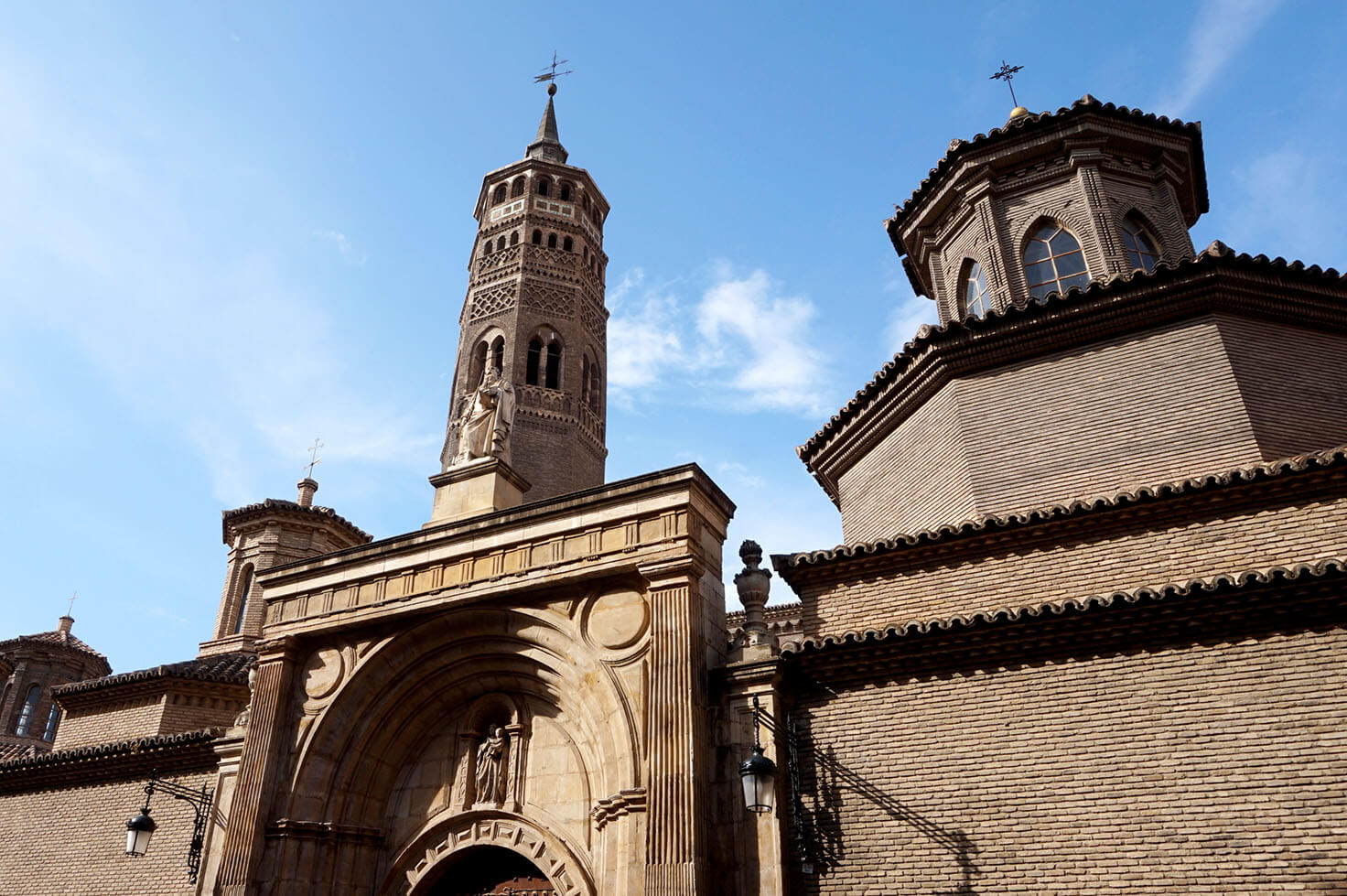
San Pablo Church is the most important example of Mudéjar architecture in Zaragoza. It was built in the 14th century over the ruins of an old Romanesque chapel.
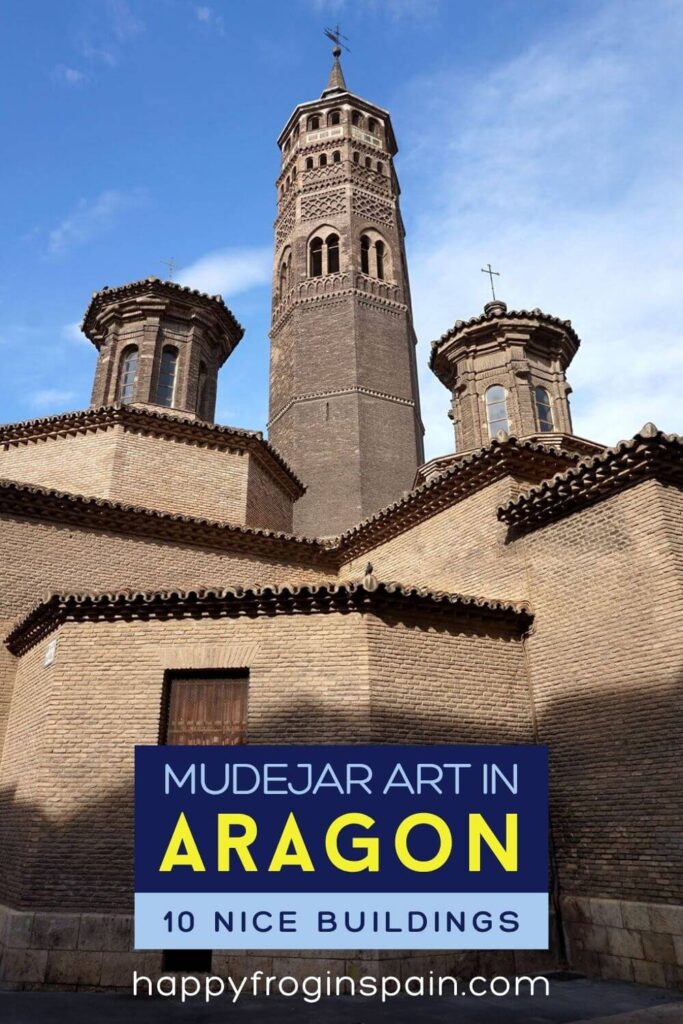
The Mudéjar tower is from 1343. It was originally near the entrance, but it was later incorporated into the body of the church. Today, only the upper part is visible from the outside.
While the original church only had one nave, two other naves were added in the 15th century. The tower consists of two octagonal concentric towers and a staircase between them. It stands out for its geometric patterns, small pointed arches, and diamond-shaped frieze.
Cathedral of the Savior of Zaragoza
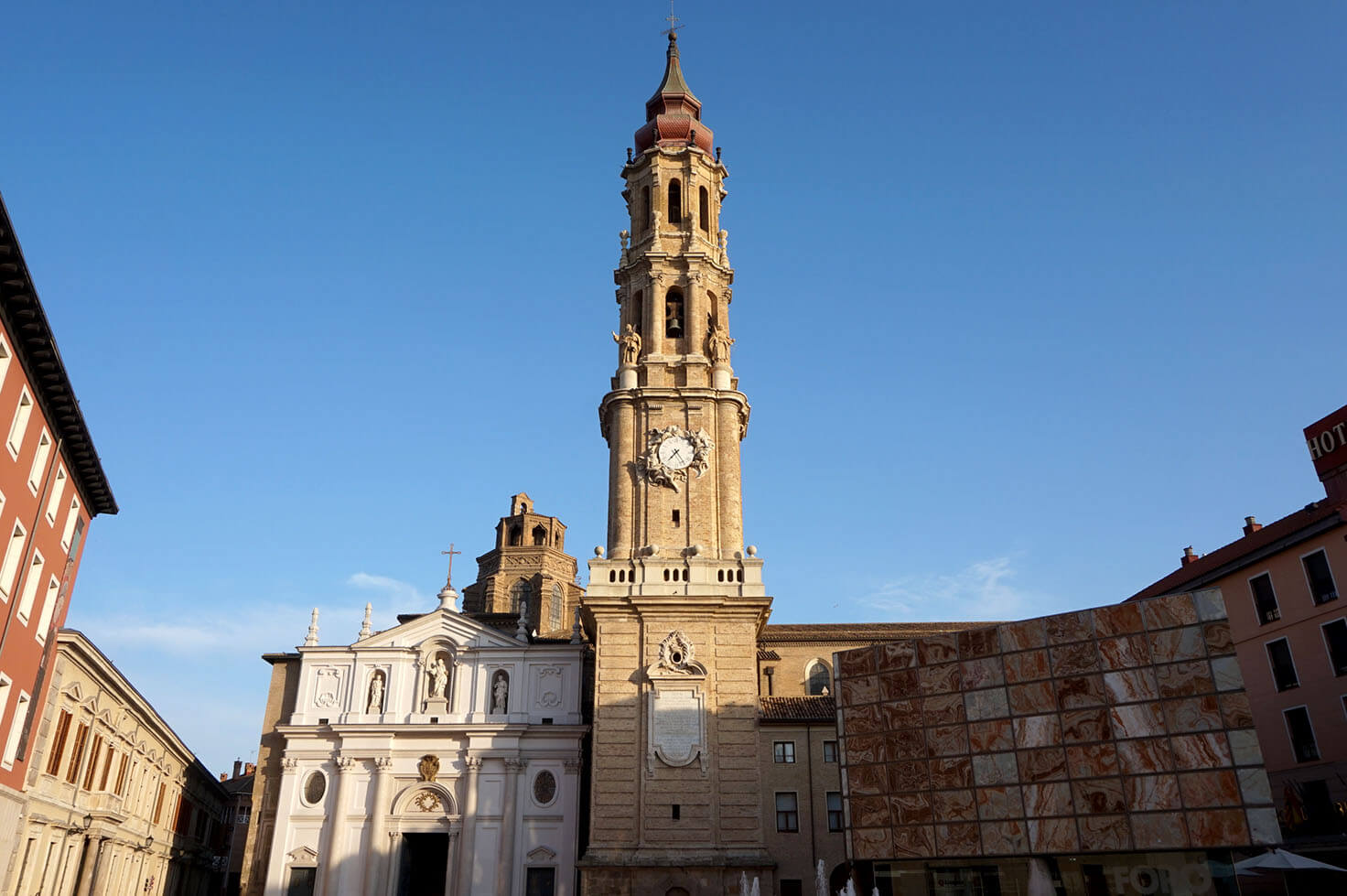
Zaragoza has two cathedrals. One of them is the enormous El Pilar, while the other one is the Cathedral of the Savior, or La Seo de Zaragoza. It boasts a long and interesting history.
The first temple on the site is from Roman times. In the 8th century, Zaragoza’s main mosque was located here, and parts of that structure are still preserved. In the 12th century, the mosque was destroyed to make room for a Romanesque cathedral.
In 1318, the church was reconstructed in Gothic style with three naves. In 1346, a dome, and in 1360, the parochial chapel of San Miguel Archangel were added. Both were built in Mudéjar style.
You can visit the Cathedral del Salvador and the Museo de Tapices.
San Gil Abad Church
In the first half of the 12th century, a Romanesque temple was built over a Roman road. It was destroyed in the 14th century to make room for Mudéjar San Gil Abad Church.
The richly decorated tower is from the 14th century. It stands out for its diamond patterns and interlaced arches. In the 18th century, the church was reconstructed in Baroque style. The main façade is from that period.
Santa María Magdalena Church
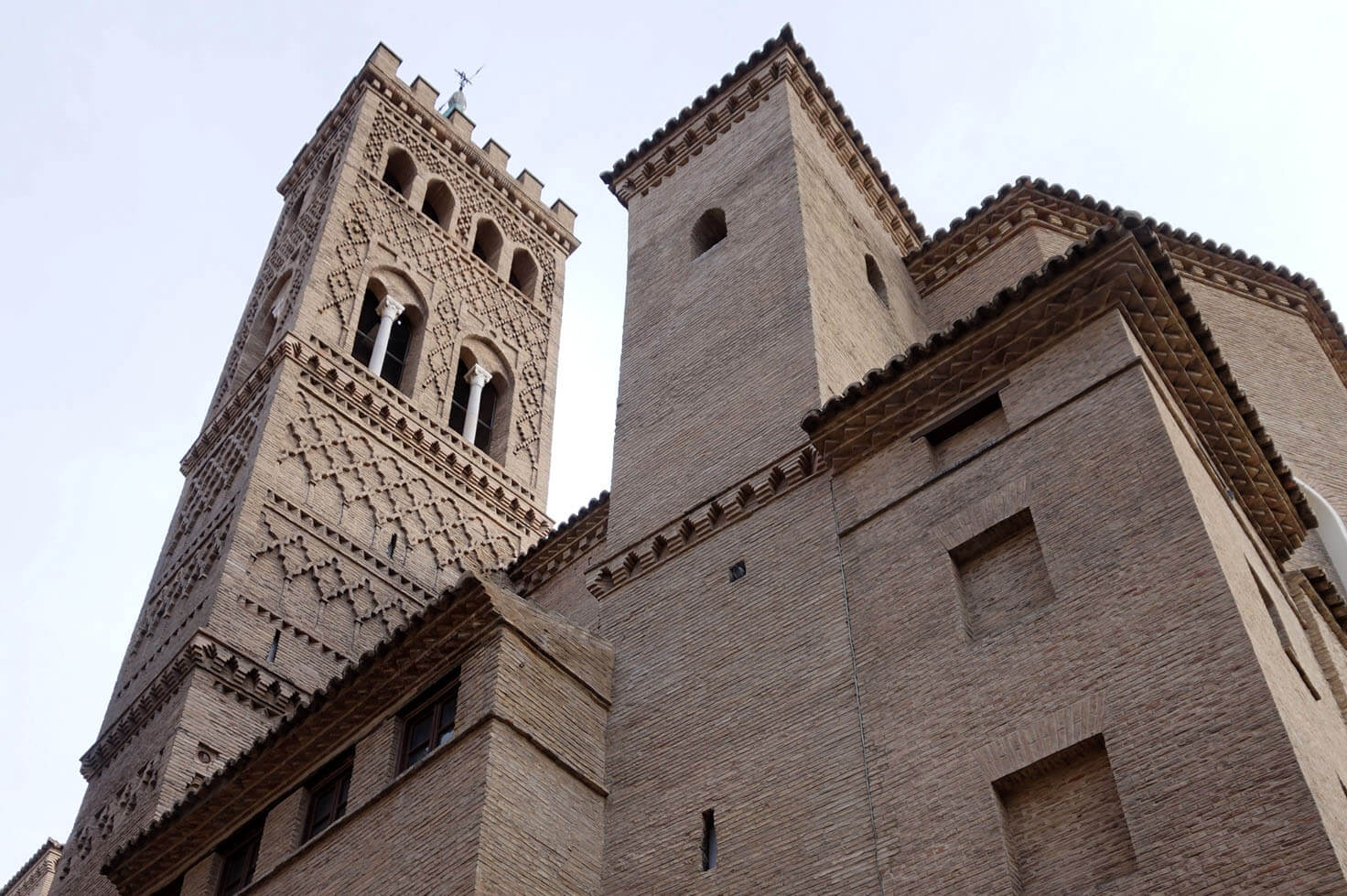
Santa María Magdalena Church has a similar history. Originally a Romanesque church from the 12th century, it was reconstructed in Mudéjar style two centuries later. The 18th-century interior is entirely Baroque.
The tower is a typical Mudéjar structure. It consists of three sections separated by imposts with white and green glazed ceramic decoration, mixt-line arches, and windows with pointed and horseshoe arches.
San Miguel de los Navarros Church
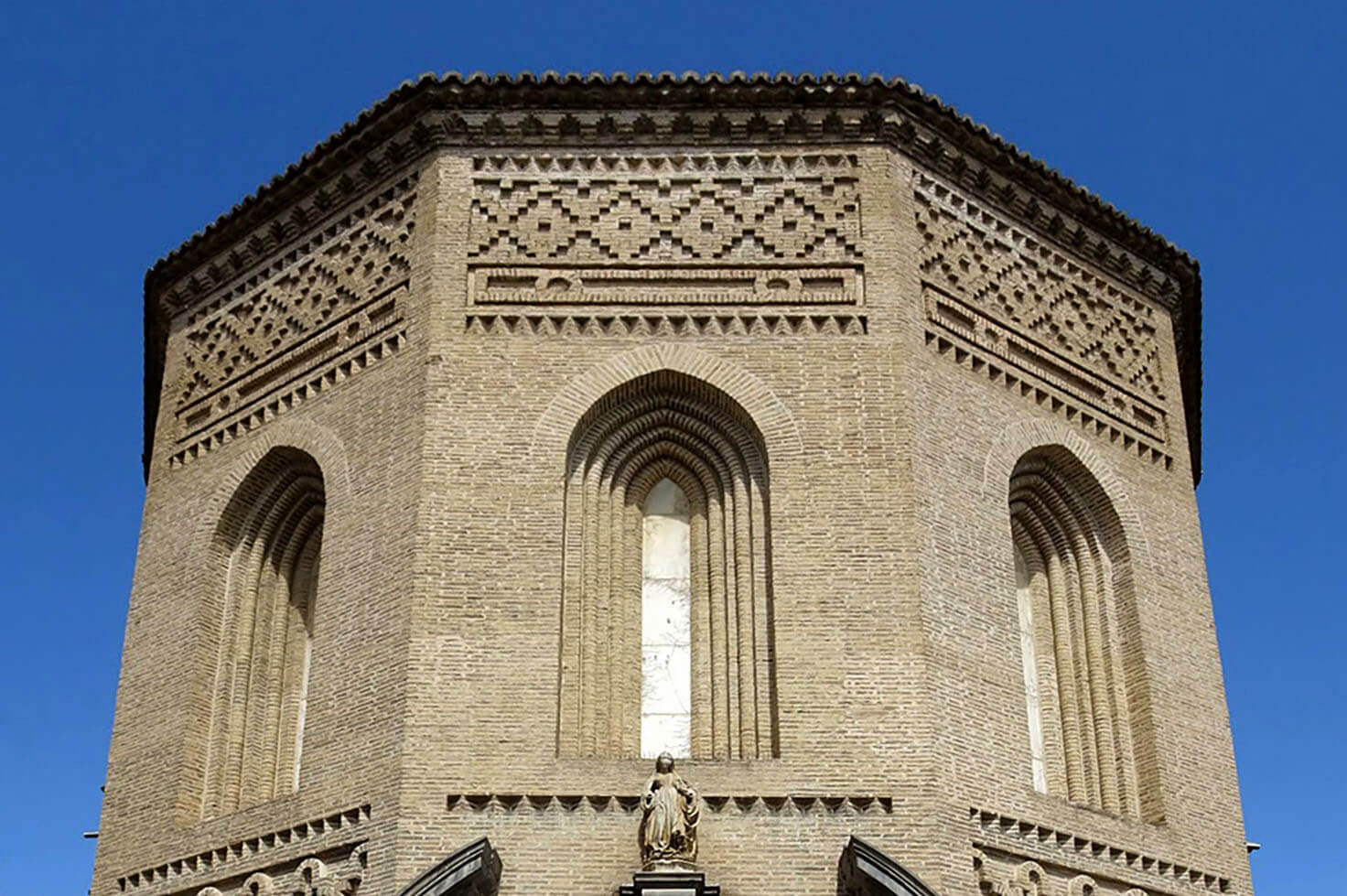
The San Miguel de los Navarros Church is another 14th-century Mudéjar church. In the 18th century, the main façade and the spire above the tower were done in Baroque style.
It’s a typical Gothic-Mudéjar one-nave church with side chapels, an apse, and a bell tower. The three-story tower features lavish decorations on its two upper floors.
Aljafería Palace
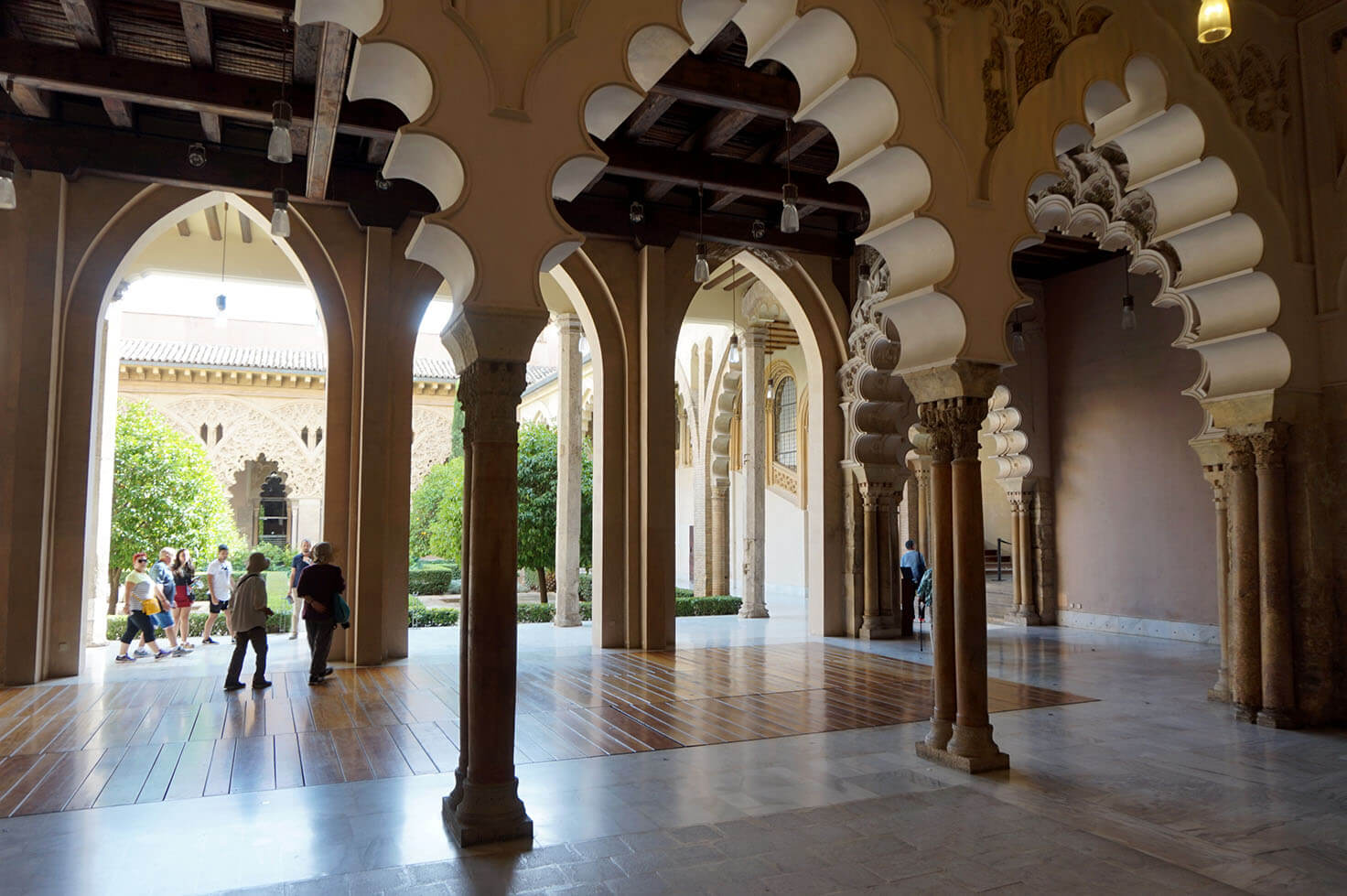
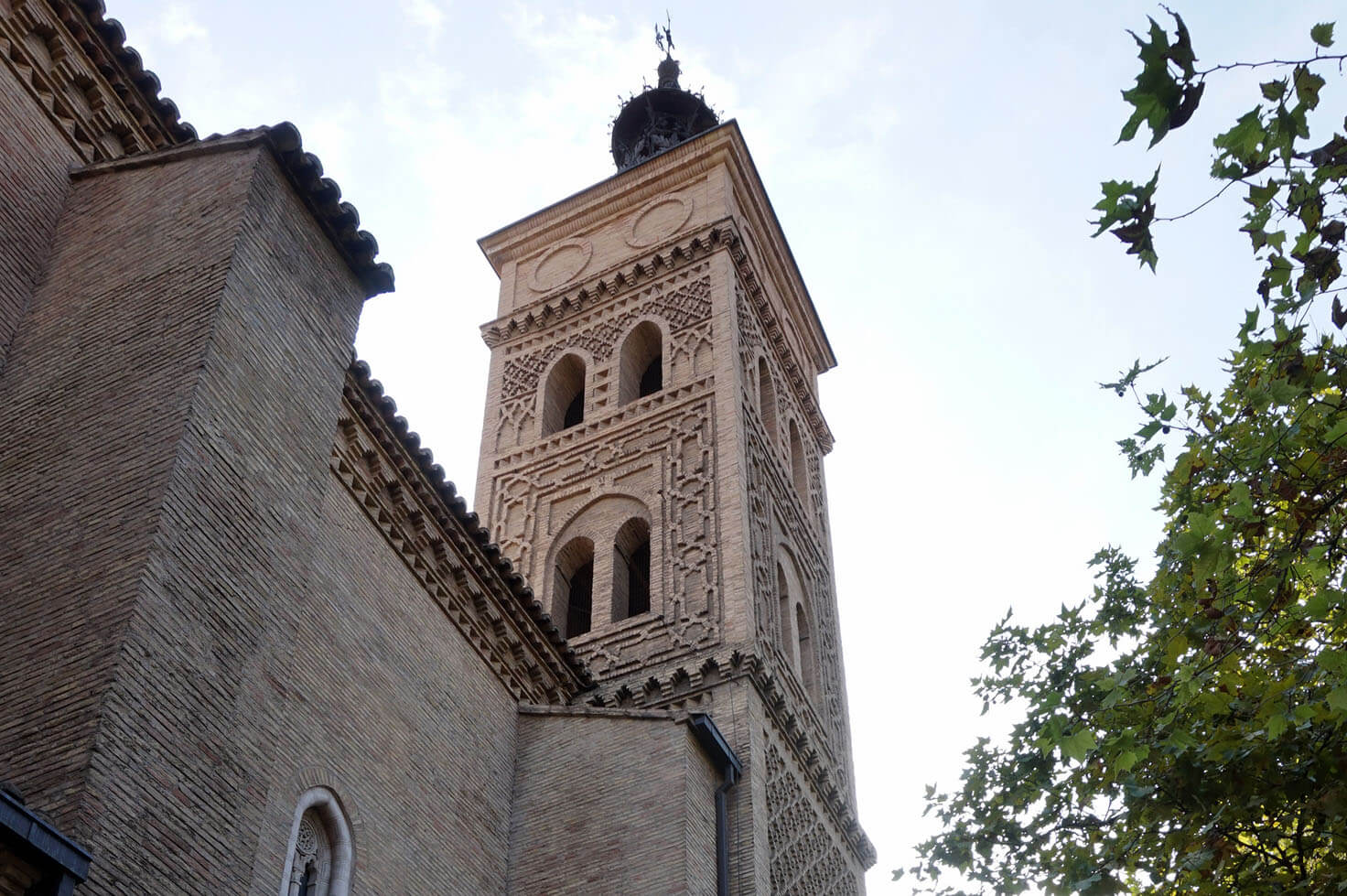
The Aljafería Palace is a fortified palace that was the residence of the Arab kings from 1065 to 1118 and Christian kings from 1118 to 1593. It currently houses the parliament of the autonomous community of Aragon.
The palace has undergone numerous reconstructions, each of them bringing a distinct appearance. The original Islamic structure was followed by Mudéjar, Gothic, and Renaissance additions. From 1593 to 1947, it had a military use.
Some of the preserved Mudéjar elements of Aljafería include the Chapel of St. Martin, the upper-floor rooms of the Palace of Pedro IV, the Throne Room, and the Room of the Lost Steps.
You can visit the palace on your own or join a guided tour.